
Seminarian Camino
Camino Francés + Lourdes
w/ Fr. Kevin McQuone
June 8 – July 18, 2026

This summer, Fr. Kevin McQuone, Associate Dean of Propaedeutic and Discipleship Formation at St. Vincent de Paul Regional Seminary, will lead a select group of 6–10 seminarians on a transformative pilgrimage along the Camino Francés (June 8–July 18). In partnership with Follow My Camino and the Camino Pilgrim Foundation (CPF), this journey forms part of Fr. McQuone’s doctoral project at the University of St. Mary of the Lake, focused on deepening seminarians’ growth as missionary disciples and pastoral leaders.
Each seminarian will invite a companion to join the second half of the pilgrimage (from Léon, Spain). Modeling Christ’s call to “go and make disciples”, the seminarians will use the discipleship skills Fr. Kevin has introduced to them, and the other men will be able to see the fruits of the seminarians’ labor and continue to deepen their own spiritual lives as they walk the Camino to Santiago.
Grounded in the four pillars on which the Camino Pilgrim Foundation is based — Spiritual Life, Prayer Life, Evangelization, and Community — this experience offers participants a profound encounter with God, others, and their own vocations. Dioceses are invited to nominate seminarians for this unique journey of faith, formation, and fraternity on the road to Santiago de Compostela.
Our journey begins as we leave St. Jean Pied de Port on a challenging ascent with rewarding views in all directions. Pic D’Orisson’s statue of the Virgin Vierge d’Orisson Vierge de Biakorri greets you in front of a magnificent backdrop of mountains and valleys. We continue uphill through the border of Spain, peaking at Col de Lepoeder (1,450 meters) then descend through one of the biggest remaining European beech forests and end the day at Roncesvalles.


After enjoying Roncesvalles’ famous pilgrim hospitality and perhaps a visit to The Royal Collegiate Church of Saint Mary, prepare for a downhill hike across the plain for the River “río” Erro. Ample woodland shade on 80% natural pathways makes Day 2 particularly delightful. The White Cross and Saint Nicholas Church in Burguete contain interesting sites of witchcraft history and persecution in Spain. This day ends as you cross the medieval bridge over the río Arga into Zubiri.
Spend half this day on a peaceful walk by the río Arga as you prepare for the bustling city of Pamplona. The last 9km of the hike takes you on hard pavement through the vibrant university town with the Cathedral of Santa María la Real XV at its center.
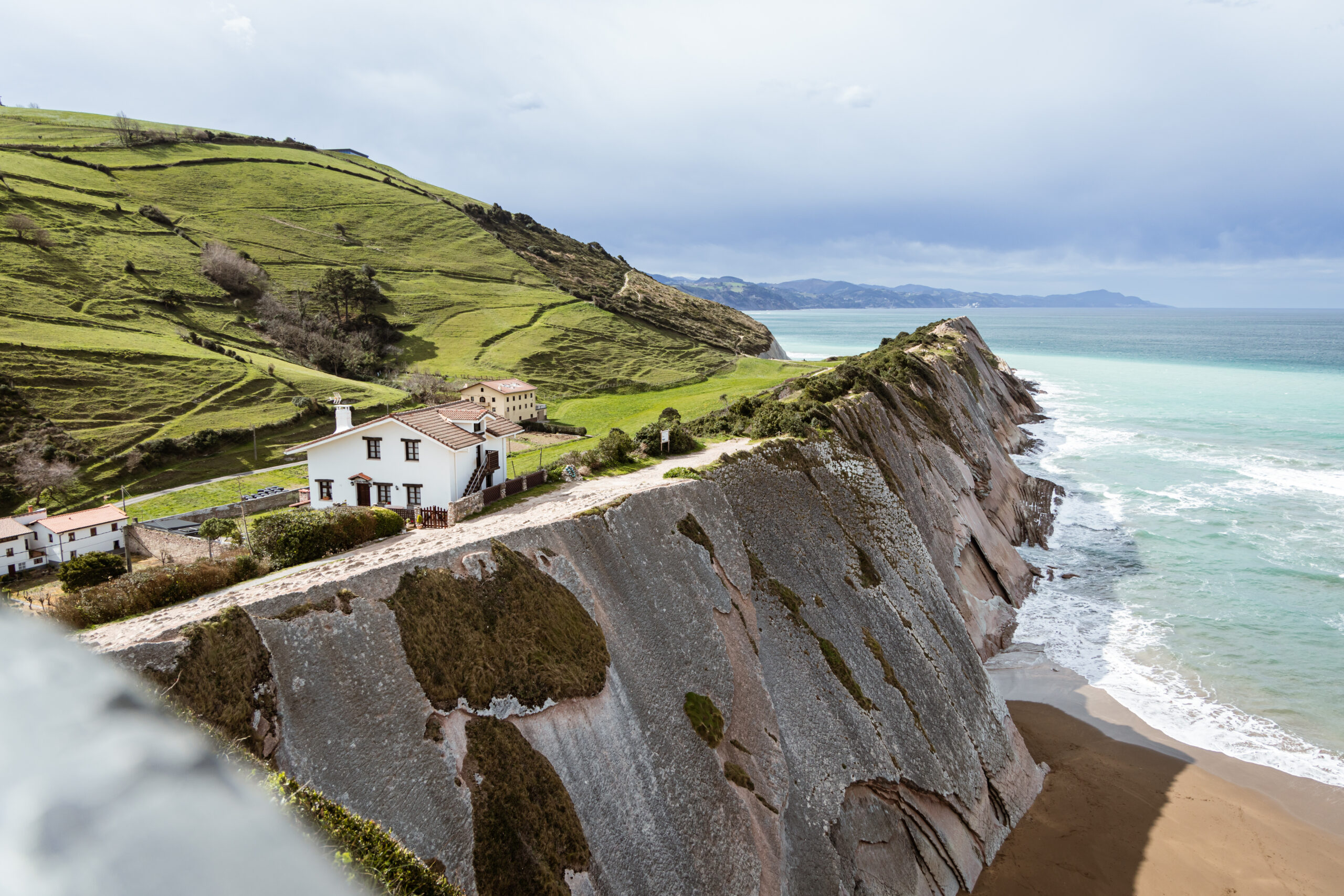
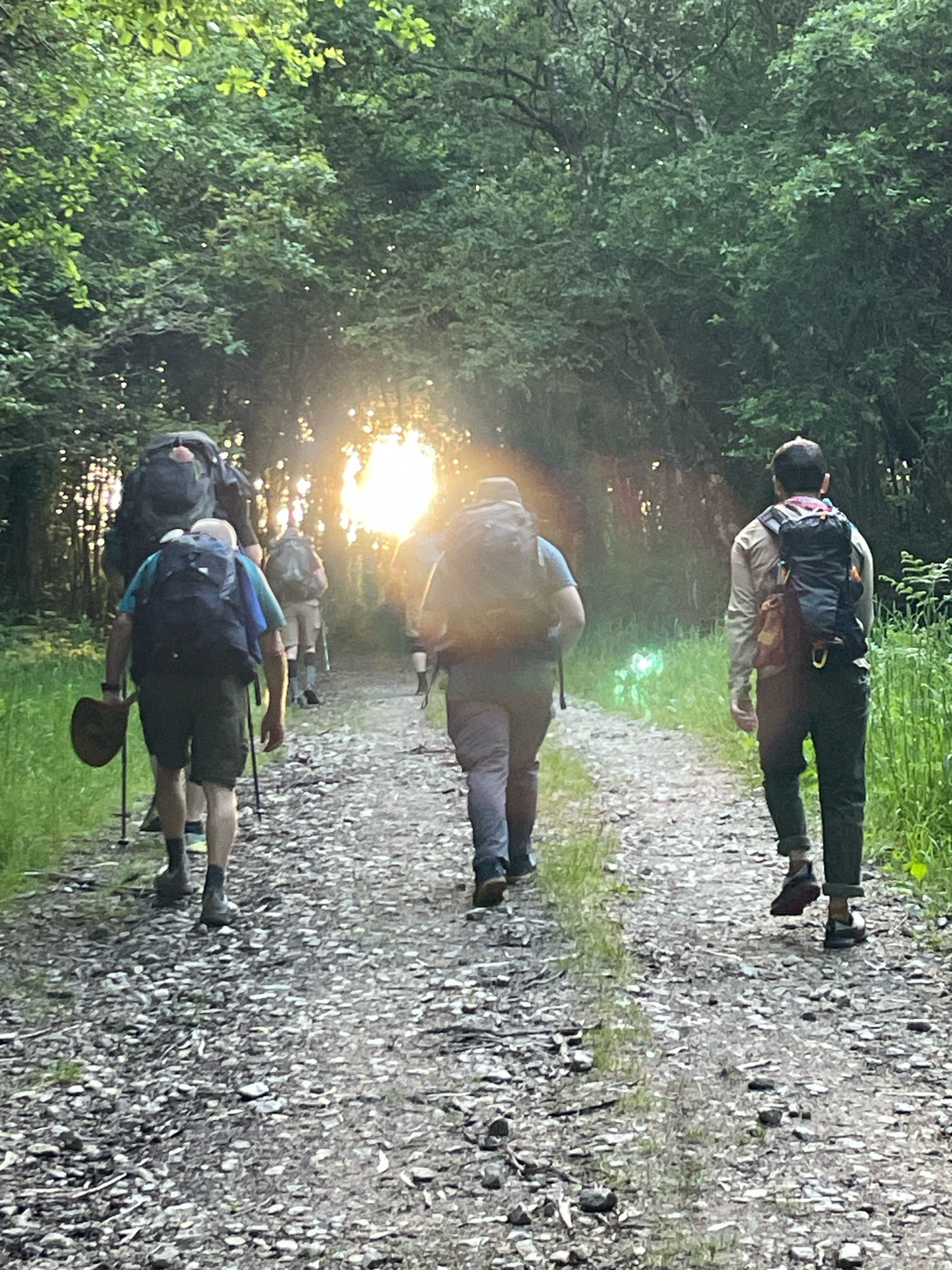
Exit the city of Pamplona on pavement as you prepare for today’s steep uphill and downhill trek across Alto del Perdón. Take in the juxtaposition of modern and ancient as you walk through a steady line of wind turbines at the summit. Make a quick stop at the Óbanos Plaza to visit the Church of St. John the Baptist which houses an impressive retablo and statue of St. James as well as St. William’s skull in a silver reliquary.
Begin today’s journey crossing the Puenta La Reina “Queen’s Bridge” over the now more powerful río Arga. Traverse fine examples of Roman roadways and admire the fine views behind you of the river valley. A highlight of this day includes strolling through the medieval village of Cirauqui. The narrow winding streets with decorative balconies and armorial crests are sure to capture your imagination. End today’s walk in Estella, the village that was created in 1090 for French pilgrim settlers.
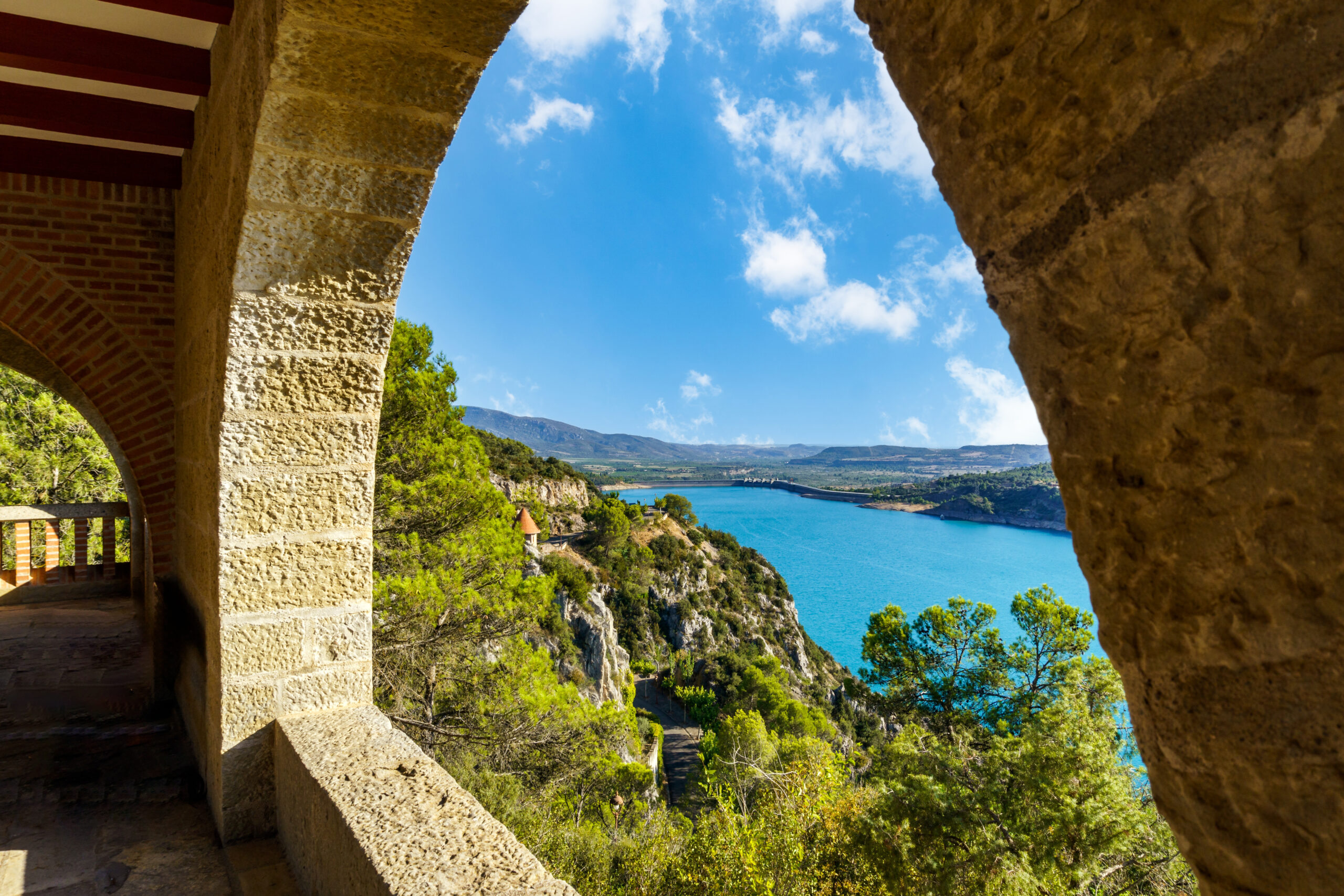

Before leaving Estella, stop for fortification at the famous Fuente del Vino or “wine fountain”. Today’s path will be a bit more isolated and challenging with a walk up to Monjardín and down through remote vineyards and sunny open country. At the peak of Monjardín take a moment to glimpse St. Stephen’s Castle. Relax after the gentle walk down at the classic pilgrim stop of Los Arcos.
Prepare for a lengthy, and possibly hot day with this journey through open farmland. Shade is hard to find and there are a few short, steep jaunts on the path. Prepare your imagination for a visit to the Iglesia de Santo Sepulcro with links to the Knights Templar and modeled after the octagonal church of the Holy Sepulchre in Jerusalem. Journey on a bit more, then take heart in becoming one of the many pilgrims that have ended their day in Logroño since the 11th century.
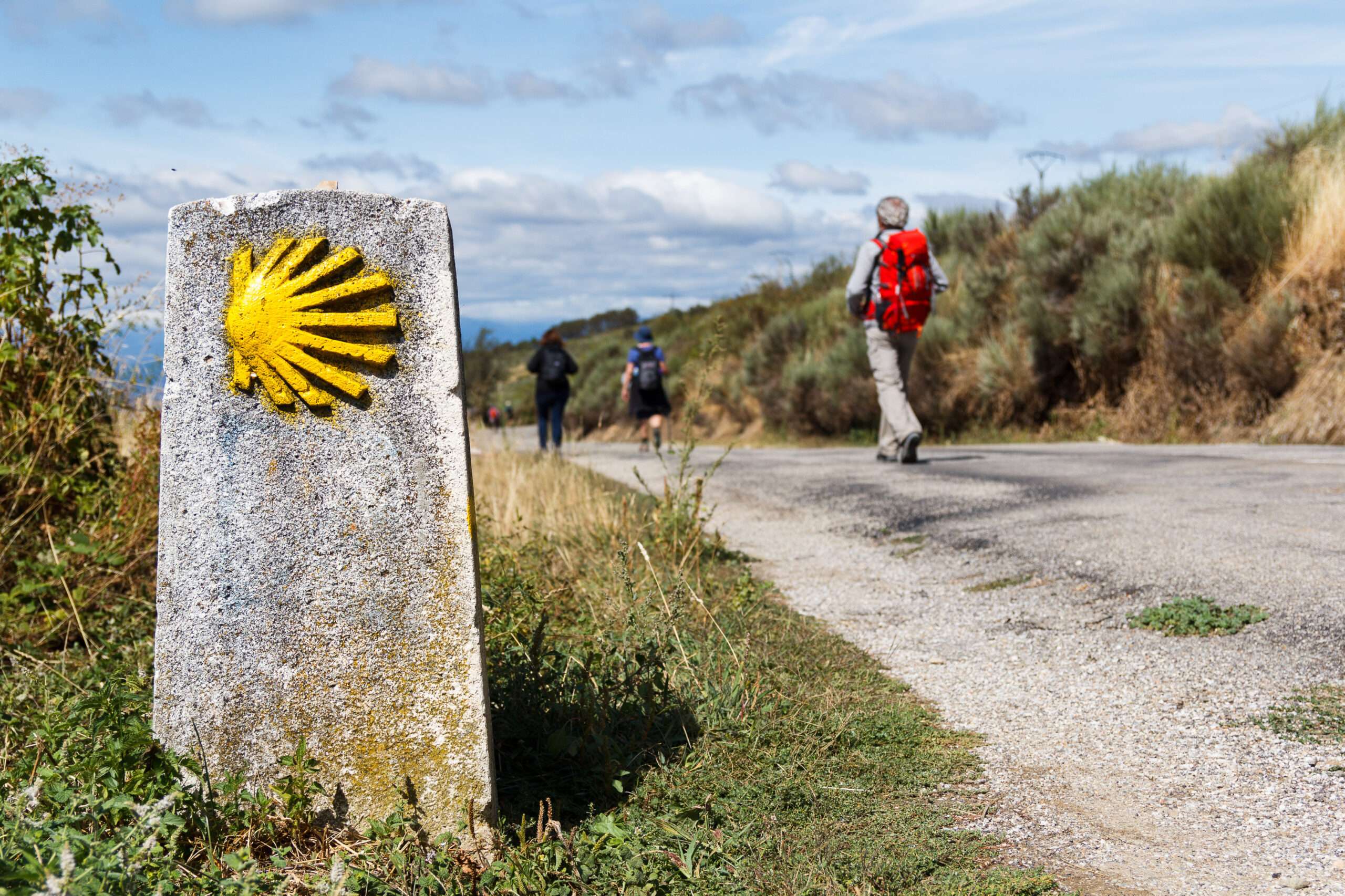
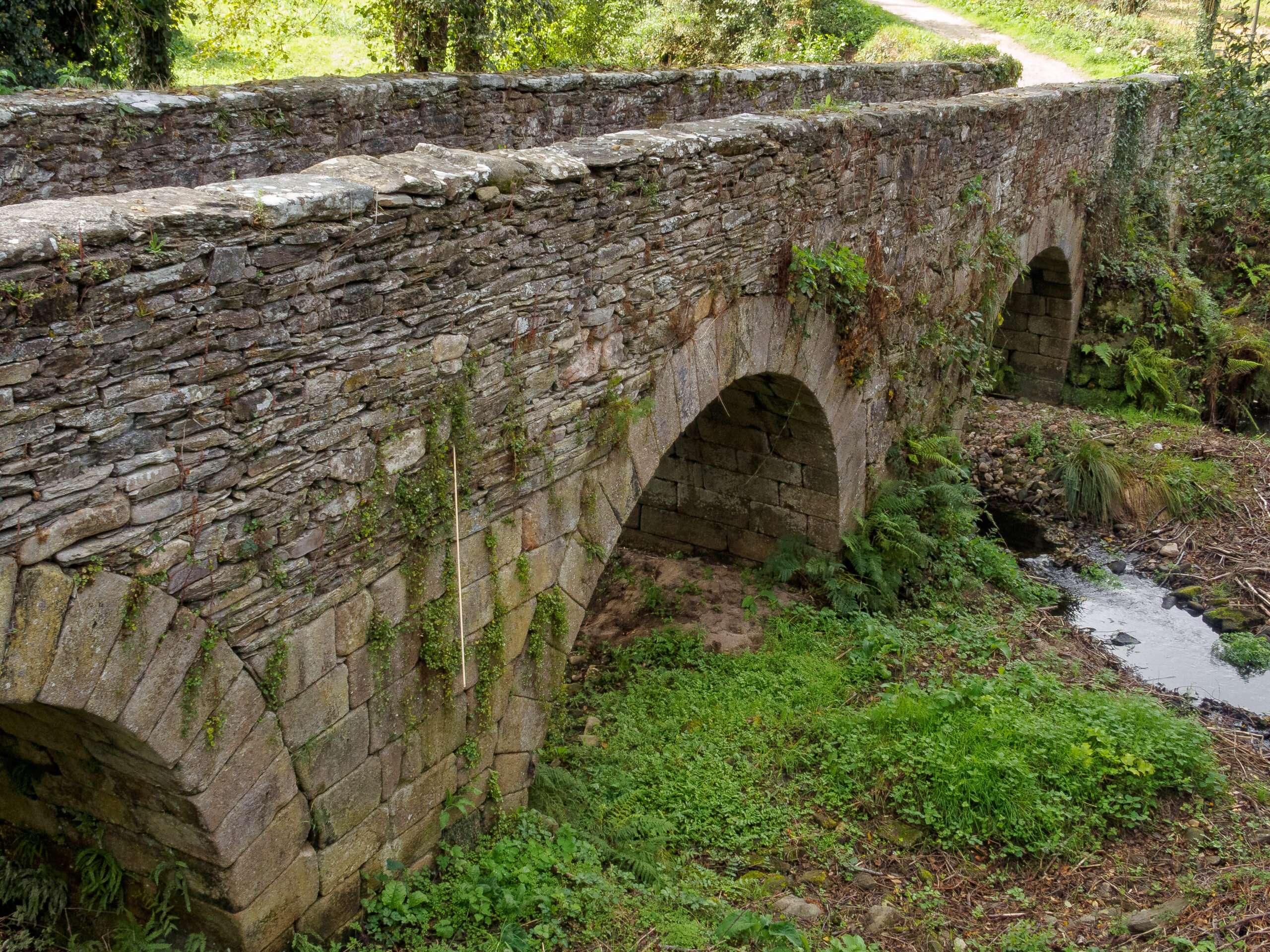
Today we walk through the bustling suburbs of Logroño and watch the ground change from pavement to the rich red soil of La Rioja. Your journey is rewarded midway through with a walk through Navarrete and the 16th century Church of the Assumption. If you still have energy upon your arrival in Nájera make time to see the Royal Pantheon of the Monasterio Santa María de la Real. The Pantheon is the burial place of many kings, queens, and knights of Navarre.
“The Camino de Santiago pilgrimage was a fantastic experience for me as a seminarian. I experienced profound spiritual growth amidst physical challenges and in the solitude of the beautiful Spanish countryside! The Camino is truly a prime breeding ground for forming disciples of the faith, an environment filled with soul-searchers who are removed from the distractions of our industrialized, technological modern world in the backdrop of the beauty of God’s creation.”
-Sam M.
Wide country roads dominate the majority of today’s walk with several detour possibilities. The main path takes us directly through the little village of Azofra (population 250) ending in Santo Domingo where we can explore the history and burial spot of the great Saint Dominic. One particularly intriguing site includes a live cock and hen in the rear of the Cathedral.
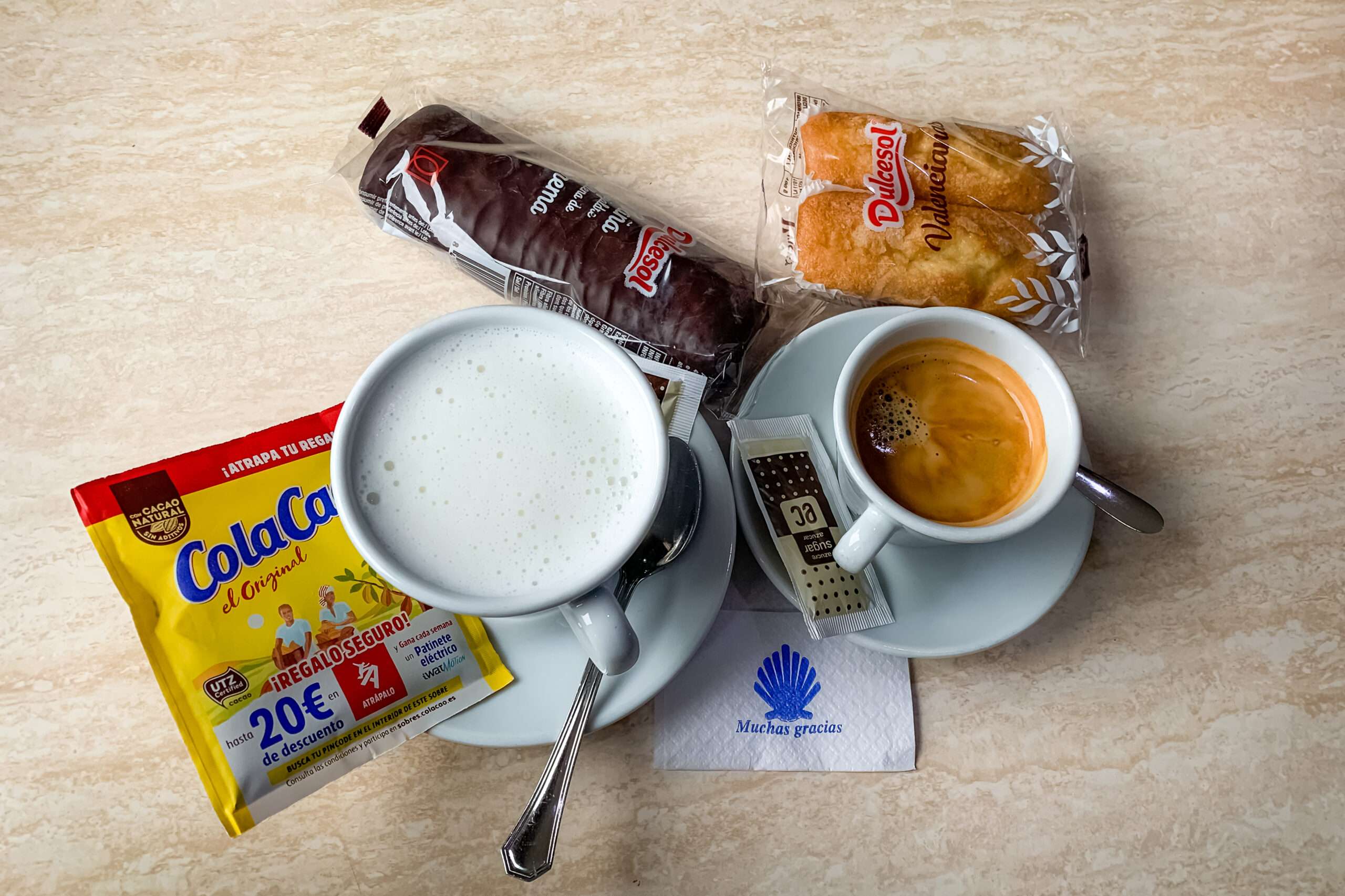
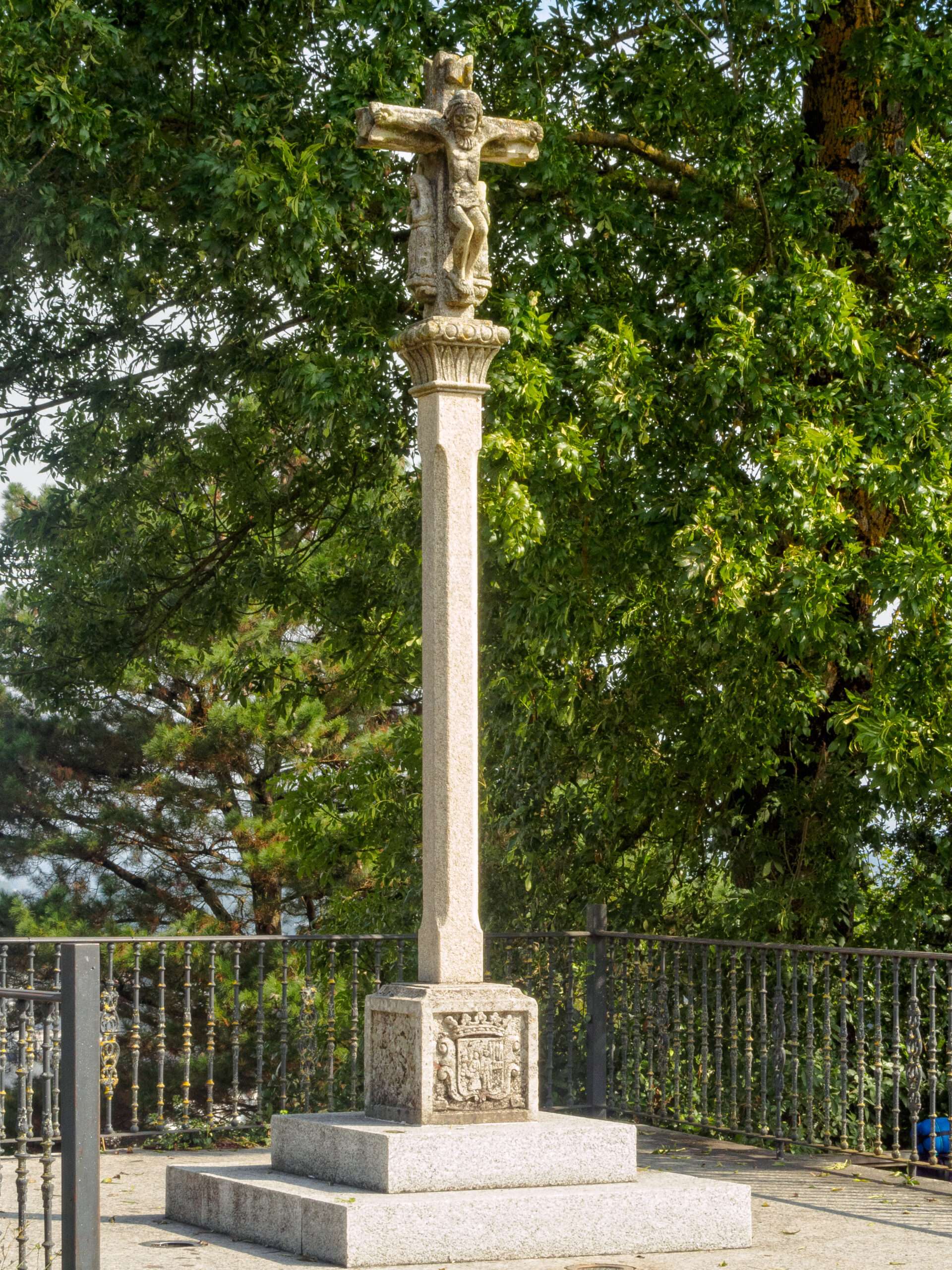
Half of today’s walk will run parallel to the busy main road (N-120) but will not be without interesting landmarks including the little village where St. Dominic was born. Explore the ancient cave dwellings used by hermits including San Capraiso, a martyr who became the patron saint of the pilgrim route to Rome.
Variation in terrain with a challenging upward climb defines our journey today. As you look down upon Villafranca, admire the 9th century ruins of Monasterio de San Félix de Oca. Check out the unusual shell baptismal font in the Church of Santiago once you make it to Villafranca. The disciple of Santo Domingo, San Juan, built many facilities helpful to pilgrims, so consider a prayer of thanks to God for him as you end this day in San Juan de Ortega.
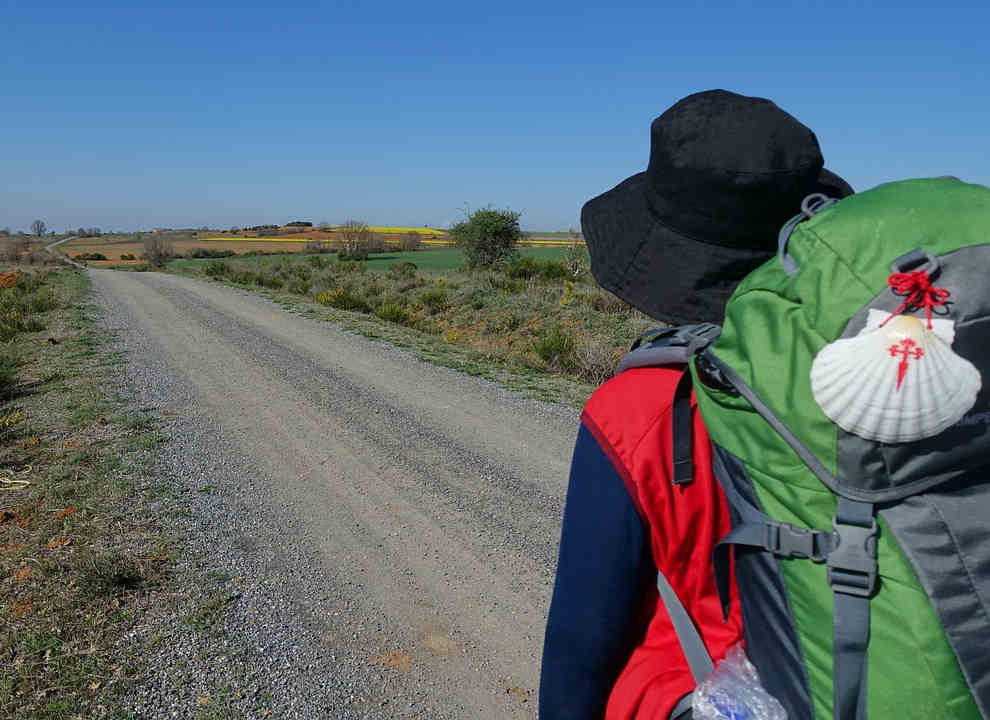

Traverse along the río Vena valley with a sharp ascent to the Sierra Atapuerca then a gentle descent to Burgos. Prepare to leave behind the more tranquil part of the Camino and dive back into city life as you approach Burgos (population 180,000). There is an option of a more scenic route, both of which end at the beautiful Catedral de Santa Maria in Burgos. One of Spain’s largest cathedrals, it boasts the recognition as a World Heritage Site due to its many artifacts and treasures.
Open sky and tranquility accompany you on today’s Camino. We’ve left behind the city bustle and make our way across seemingly endless cornfields. Say a prayer at a chapel dedicated to a little-known French saint, San Amaro de peregrino, who devoted his life to the well being of other pilgrims. Finally, absorb some medieval charm at our resting place in Hornillos.

“Walking the Camino with Fr. Kevin, while I was discerning entering seminary, was a transformative spiritual experience where I grew closer to God and learned the simplicity of life. Fr. Kevin was a calm leader as he led us from town to town. Whenever I wonder what evangelization in an apostolic age would look like, I always think back to Fr. Kevin’s example each day as he modeled bringing Christ to the various people we encountered.”
-Michael A.

Another peaceful day on the Meseta awaits us today. Stop at a healing well to cure your aching feet before you approach the classic pilgrim village of Hontanas. If you still have energy, walk the twenty minutes to the Castillo in Castrojeriz for an unforgettable sunset.
Stock up on water before you make the steep climb out of Castrojeriz. Then relax as the path slides downward and smooths out, much of which is on earth tracks. Walk across the río Pisuerga on the eleven arches of the Puente de Itero into the Provincia de Palencia known for its rich soil and wine production. End your day admiring the Romanesque church, Iglesia de San Martín (1066), in Frómista.


Much of the day follows the main road, although a more scenic route is available at the price of an extra .9km. Both paths converge in Villalcázar de Sirga, the former Knights Templar commandery. Do not miss the rose window of the Santa María la Virgen Blanca. A frightful end to your day can be found in Carríon de los Condes in an ancient frieze in the Iglesia de Santa María del Camino which illustrates the annual sacrifice of one-hundred maidens by the conquering Moors.
Flat and desolate trails mark our path today. A good day to ponder how our sacrifices can glorify God. Pass through wetland with an over 2,000 year old Roman road still intact before strolling through Calzadilla Romana and then further to Terradillos de los Templarios. We are now approximately halfway between St. Jean Pied de Port and Santiago de Compostela!


A relatively flat path today, a good portion along the main road again as you cross into Provincia de León. A highlight of the day includes a detour through Sahagún with links to San Benito, Charlemagne and Saint Facundo. The possibilities abound to admire religious buildings and art.
Follow the footsteps of the illustrious Emperor Augustus on the longest surviving stretch of Spanish Roman road. The Real Camino Francés and the Calzada Romana converge in Mansilla denoting it as an important pilgrim stop. Enjoy this country town as we prepare for the big city tomorrow.

Much of today’s journey, except a much-needed respite around Arcahueja, is on the road. As we get closer to the city of León waymarking can be more difficult to follow. Stay focused and keep moving along The Way.
The history of the Camino is richly woven within the tapestry of León. From the sacred spaces of Real Basilico de San Isodoro, the León Cathedral Pulchra Leonina, and the Renaissance San Marcos to an entire top floor of the Museo de San Isidoro dedicated to the Camino, there is no shortage of inspiration for the journey ahead. Once you leave León the most direct route will take you along N-120 to Villadangos del Páramo (or take the more scenic route to Villar de Mazarife and meet up tomorrow in Astorga).


Today’s walk is relatively flat until Hospital de Orbigo, then we traverse gently rolling hills into Astorga. Pleasant shade can be found on this day and there will be much to contemplate in Astorga. The Cathedral and Episcopal Palace designed by the renowned architect Antoni Gaudi will delight the senses upon arrival. The mountains Montes de Leon behind the city remind us to get a good night’s rest as we make the ascent to the highest point on the Camino over the next few days.
A slow ascent as we approach the mountains and gear up for the dropping temperatures and rough terrain in the days ahead. Enjoy passing through broom, oak trees, and conifer plantations. You can find a relic of Saint Blaise in the tiny town of Santa Catalina about halfway through the day. End the day in Rabanal del Camino – a town known to care for pilgrims before they depart on the steep path up and through Monte Irago.


This day will be tough, but one of the most rewarding. Humble beauty of the iconic Cruz de Ferro (iron cross) will reward you at the highest climb of our Camino – (Puerta Irago 1,504 meters). Be very careful on the slippery descent after the Alto Altar.
The fertile beauty of the Bierzo (a low-lying plain encircled by mountains) surrounds us today. The climate produces many types of vegetation including some delicious wines. Try a Bierzo wine with a botillo (thick sausage marinated in local vegetables). The most populated stop of the day, Ponferrada, has a wonderful medieval old town as well as the Templar Castle that should not be missed. Several other notable chapels will dot our path before we end the day in Villafranca del Bierzo.


We already passed the highest point of our walk (Puerta Irago) a couple days ago, but today is the steepest and most challenging journey. Our diligence is rewarded with breathtaking views along the Varcarce valley. After the steep ascent to O Cebreiro, take a moment to admire one of the oldest churches associated with the Camino – the 9th century Iglesia de Santa Maria Real. Say a prayer of thanksgiving to Don Elias Valiña Sampedro whose final resting place lies in the church. He had the idea to mark the Camino path with the familiar yellow arrows. Today marks our first steps into the region of Galicia as well.
Today our path crosses through the Ranadoiro Mountains, over the Alto do Poio and then a final long descent into Triacastela. While the three castles that our destination is named after no longer exist, there is an interesting relief of them on the parish church tower in the village. Enjoy this peaceful walk as the population of pilgrims will increase as we get within a week of Santiago.


There are two popular routes you can take to Sarria. The first is the more direct northern route via San Xil and the second one is a southern detour via Samos. The northern route is about 6 km shorter, with a very steep climb up to alto do Riocabo (splendid views included). Samos has one of the oldest and largest Benedictine monasteries in Spain that attracts many tourists. Either way is special, and both will lead to you the beautiful capital of the region. Sarria was the center of Camino services in medieval times with many churches, monasteries, chapels and 7 pilgrim hospitals. Today it is a bustling town of 13.500 and a popular Camino start for those wanting to achieve the minimal distance (100km) to secure a compostela.
Peacefully walk in lovely oak tree shade and quaint villages for most of today’s journey. The Romanesque Church of Santiago de Barbadelo is a picturesque stop. Cross the río Miño just as you enter the final stop for the day – Pontomarín.


Start the day with a tranquil climb up to Sierra Ligonde (720m) passing the tiny Romanesque Capela da Magdalena, a former Knights Templar hospital. On your gentle climb around Alto do Rosario, join countless past pilgrims in a recitation of the rosary. Then drop down finally into Palas de Rei.
Take a woodland stroll today through six river valleys which make the path pleasant despite several intersections with the N-547. Witness the beauty of the Romanesque 13th century Santa Maria church and its carved stone “Mary with the Jesus child” in the recessed area over the entrance. The halfway point of Melide is a great spot to try the famous octopus dish pulpo Gallega. You will also cross several medieval bridges and the Church of San Pedro and San Roque which is said to have the oldest stone cross in Galicia – the 14th century Crucero do Melide – Christ in Majesty.


Our path is riddled with short, but steep ascents and descents today. Your way becomes more populated as the Camino del Norte joins the Francés today. If you are so inclined visit the “wall of wisdom” in Taberna Velha filled with traveler’s quotes and advice for The Way. As you skirt around the Alto de Santa Irene take a moment to enjoy the church with the same namesake and unique statues of Santiago.
You have nearly made it! This stage of the journey is exciting because of its end, but there is also much to see along the way. The day begins through a dense eucalyptus forest. As you skirt around the Santiago-Rosalia international airport, you will notice the contrast between that and the history of Lavacolla as the place where medieval pilgrims used to bathe for purification before entering Santiago. Climb your way up the Monte del Gozo for a glimpse of your goal – the Cathedral of Santago! Descend to the city and get ready to soak in all that comes with a goal achieved and a spiritual destination reached.

“The pilgrimage that I took in 2025, walking the Camino de Santiago, was truly a metaphor for our earthly pilgrimages towards heaven. As in life, there were many highs and many lows on the camino. Father Kevin McQuone was there for me through it all. I couldn’t tell you the sheer amount of wisdom I got just from walking and talking with him. Father Kevin was truly the backbone of our Camino group as he walked, talked, guided, and taught us, as well as, most importantly, delivered us the sacraments! He did what every priest should be able to do well, and that was be a true spiritual Father to us. Father Kevin showed me how through his actions and the way that he deeply cared about me and everyone in the group.” —Jack O.
For more information about the Discipleship Camino or to sign up, please complete the form below.
Please be on the lookout for an email with details about the informational meeting after you sign up.